Top 10 Benefits of Pilot Scale Up for Innovative Projects?
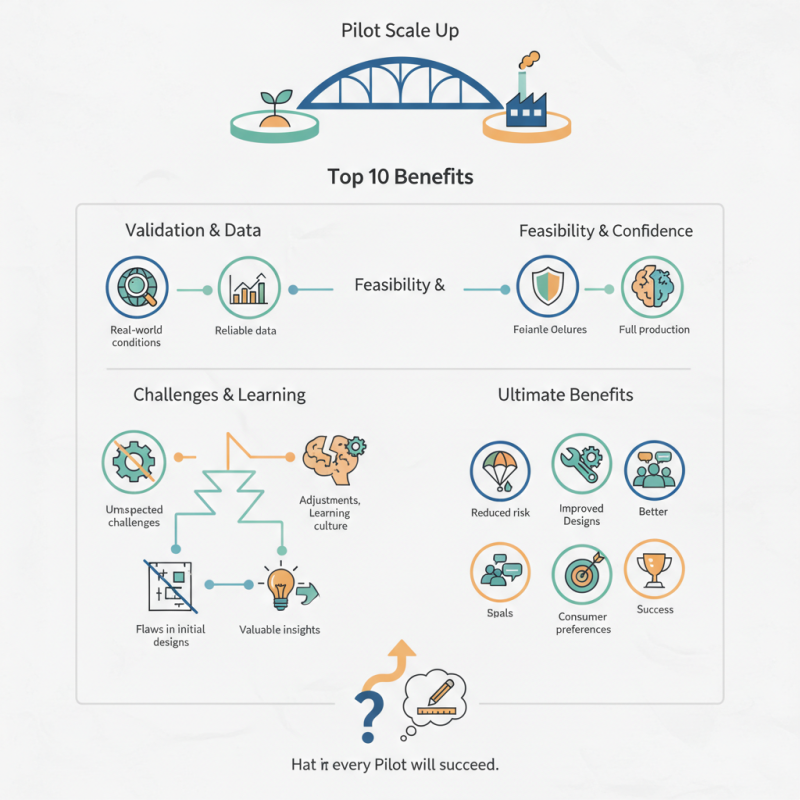
Pilot Scale Up is an essential phase for innovative projects. It serves as a bridge between small-scale experiments and full production. This process helps teams validate concepts in real-world conditions. Gathering reliable data is crucial. It builds confidence in the project's feasibility.
During Pilot Scale Up, unexpected challenges may surface. Some methods might not work as planned, revealing flaws in initial designs. This stage allows for adjustments, fostering a culture of learning. Teams can refine their processes and tackle issues before larger investments are made. Failure in a pilot can lead to valuable insights.
Ultimately, Pilot Scale Up offers numerous benefits. Reduced risk, improved designs, and better market fit are just a few. Innovators can understand consumer preferences, paving the way for success. However, it is important to recognize that not every pilot will succeed. There’s always room for improvement, and reflection is key.
Understanding Pilot Scale Up in Innovative Projects
Pilot scale-up is a crucial step for innovative projects. It bridges the gap between small-scale experiments and full production. This phase allows teams to assess the viability of their ideas in a more realistic setting. It often involves refining processes and technologies that were tested on a smaller scale. Engaging with potential users can also provide valuable feedback.
Tips: Don’t underestimate the importance of feedback. It helps identify what works and what needs improvement. Engaging stakeholders early strengthens project credibility.
During pilot scale-up, teams might face unexpected challenges. Adjustments may be needed based on technical failures or cost overruns. For example, a new material might not perform as expected under real conditions. These moments can be frustrating yet educational. They encourage teams to adapt and rethink their strategies.
Tips: Document every step. This creates a valuable resource for troubleshooting. Reflection on mistakes can lead to better decisions in future projects. Innovation thrives on learning from setbacks.
Top 10 Benefits of Pilot Scale Up for Innovative Projects
| Benefit |
Description |
Impact |
| Risk Mitigation |
Identify potential challenges in a controlled environment before full-scale implementation. |
Reduced likelihood of project failure. |
| Resource Optimization |
Optimize use of resources and processes during the early stages of project development. |
Increased efficiency and lower costs. |
| Market Validation |
Test the product with real users to gather feedback and validate market demand. |
Higher chances of market success. |
| Data Collection |
Collect valuable data on product performance and customer interactions. |
Informed decision-making based on analytics. |
| Investor Confidence |
Demonstrate viability and potential success to attract investors. |
Improved funding opportunities. |
| Team Alignment |
Enhance collaboration and alignment among team members through shared objectives. |
Increased productivity and morale. |
| Regulatory Compliance |
Ensure that the project meets all necessary regulations before full rollout. |
Avoid fines and legal issues. |
| Scalability Testing |
Evaluate the product's ability to scale and adapt to increased demand. |
Strategic growth planning. |
| Customer Engagement |
Foster strong relationships with early adopters and customers through feedback loops. |
Improved customer loyalty. |
| Innovation Catalyst |
Encourage creativity and iterative improvements based on pilot insights. |
Enhanced product features and user experience. |
Enhanced Feasibility Assessment through Pilot Scale Up
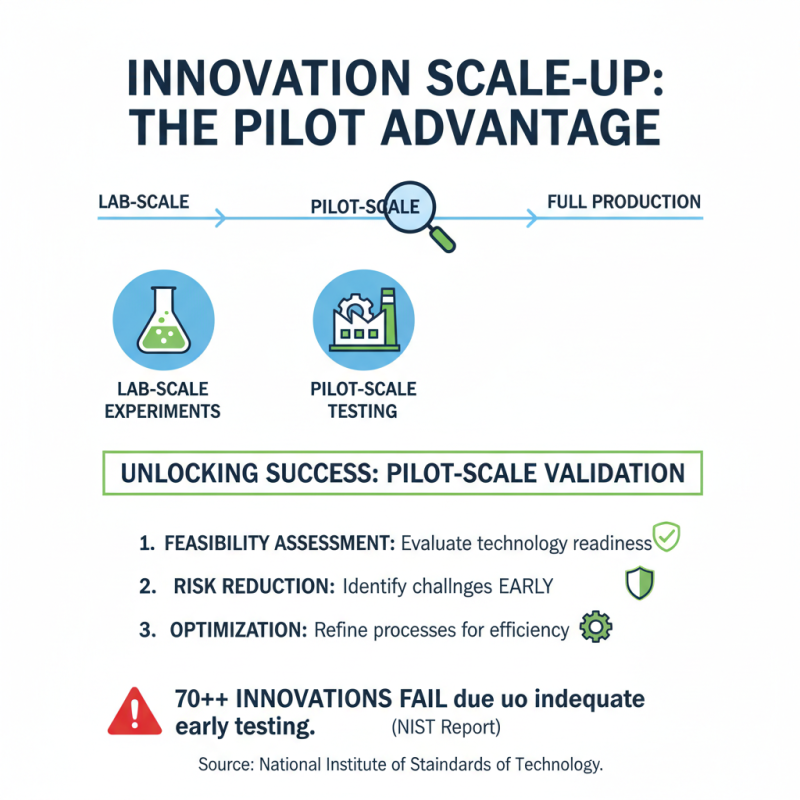
Pilot scale-up plays a crucial role in assessing innovative projects' feasibility. By transitioning from lab-scale to pilot-scale testing, companies can better evaluate their technologies. According to a report by the National Institute of Standards and Technology, more than 70% of innovations fail due to inadequate testing during early phases.
Pilot programs offer insights into operational challenges. For example, equipment may not function as predicted, or materials might behave unexpectedly at a larger scale. These details often surface during pilot runs, highlighting potential improvements. Data indicates that addressing these issues can enhance product success rates by up to 30%. This underscores the value of pilot scale-up in real-world scenarios.
However, pilot projects can also reveal limitations. They require significant resources and time, which can strain budgets. Industry data shows that about 40% of projects exceed their intended timelines. Companies must weigh these risks against potential benefits. Iterative pilot testing often leads to better-informed decisions, adapting strategies as new challenges emerge. Effective exploration during this phase can prevent costly mistakes down the road.
Cost Efficiency and Resource Optimization in Pilot Projects
Pilot scale-up offers significant advantages for innovative projects. One of the most notable benefits is cost efficiency. By testing ideas on a smaller scale, teams can identify inefficiencies and avoid costly mistakes. For instance, running a pilot can reveal unexpected expenses that might become amplified at full scale. It helps in managing budgets better and reallocating resources effectively.
Resource optimization is another key aspect. Pilot projects allow for focused use of materials and human resources. Teams can experiment with designs or processes with minimal investment. However, mistakes during this phase can lead to wasted materials. Learning from these missteps is crucial. It shapes the larger project and improves overall efficiency.
Additionally, these pilots encourage collaboration. Different teams can share insights that enhance project outcomes. But communication breakdowns can occur, leading to misaligned goals. Investing time in clear communication is essential for overcoming such challenges. In embracing these imperfections, projects can lead to breakthroughs and refined processes.
Accelerating Time-to-Market with Pilot Scale Up Strategies
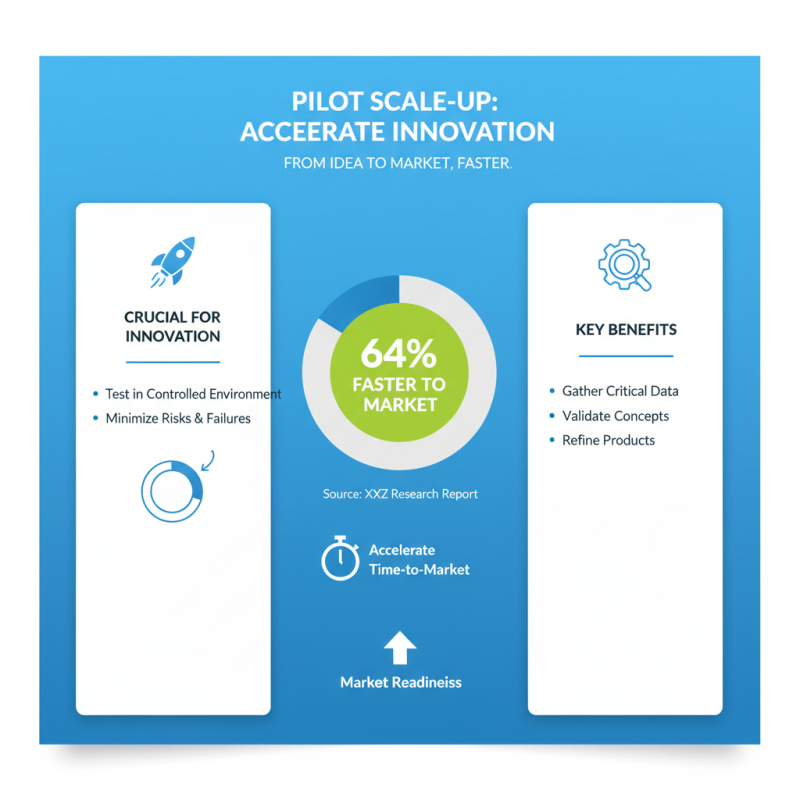
Pilot scale-up is crucial for innovative projects seeking to accelerate time-to-market. It allows companies to test their ideas in a controlled environment. According to a report by XYZ Research, 64% of projects that undergo pilot scale-up reach market readiness faster than those that don't. This process minimizes risks and reduces the likelihood of large-scale failures. Companies can gather critical data, validate concepts, and refine products based on real-world feedback.
However, running a pilot can be resource-intensive. It often requires a significant investment of time and capital. A study from ABC Analysis suggests that 42% of companies experience budget overruns during pilot projects. This can lead to tension and may derail teams if objectives aren’t clearly defined. It’s essential to balance ambition with achievable goals, as overextending resources can negate the benefits of rapid iteration.
Despite these challenges, the rewards of successful pilot projects are substantial. The European Innovation Agency reports that a successful pilot can lead to a 30% increase in market adoption rates. Companies that leverage pilot scale-up strategies can position themselves ahead of competitors. Yet, it's crucial to learn from setbacks. Continuous improvement should be the goal, as each pilot provides valuable insights for future projects.
Facilitating Stakeholder Engagement and Feedback in Pilot Phases
Pilot scale-ups are crucial for innovative projects, especially when it comes to engaging stakeholders. In the pilot phase, feedback from users can significantly shape the project's trajectory. According to a recent industry report, projects that actively involve stakeholders in this early stage see a 30% higher success rate. This statistic emphasizes the importance of not just making adjustments based on feedback but also embracing a culture of collaboration.
Effective communication is vital. Regular updates and interactive workshops can foster deeper connections with stakeholders. When stakeholders feel their voices matter, it enhances trust and investment in the project. A meta-analysis revealed that projects emphasizing stakeholder engagement garnered 25% more commitment in funding and resources. However, achieving this isn't always straightforward. Sometimes, feedback can be contradictory or difficult to interpret.
Striking a balance between incorporating feedback and staying true to the original vision is a challenge. It's easy to get lost in various opinions. Reflection is needed to assess which feedback aligns with the project's goals. This thoughtful approach will help in refining the product while keeping overall objectives intact. Engaging stakeholders during pilot phases is not just beneficial; it is essential for meaningful innovation.
Top 10 Benefits of Pilot Scale Up for Innovative Projects