In the fast-paced world of research, maximizing your potential in an Innovative Laboratory is crucial. Dr. Emily Chen, a leading expert in laboratory innovations, once stated, “Embracing creativity in the lab can lead to groundbreaking discoveries.” Her words highlight the importance of thinking outside the box.
Innovative Laboratories thrive on unique approaches and fresh ideas. Routine tasks often stifle creativity. Experimenting with new methods and technologies can reveal unexpected results. For instance, using digital tools for data collection can enhance efficiency. Each small adjustment can create significant advantages in project outcomes.
However, not every experiment will yield favorable results. Some ideas may flop, and that's okay. The key lies in learning from these failures. Reflecting on unsuccessful attempts can spark new insights and drive progress. Emphasizing resilience in the face of setbacks is vital for the growth of any research team. An Innovative Laboratory should embrace both success and failure as part of the journey.
A well-organized laboratory workspace can significantly enhance research efficiency. Begin by identifying frequently used items. Keep them within easy reach. Use labeled bins for samples and tools. This simple step helps minimize time spent searching. A cluttered bench can distract you from your experiments. Consider creating zones for different tasks. Designate areas for preparation, experimentation, and data analysis. This separation keeps your focus clear.
The layout of your workspace matters. Consider the flow of your workflow. If materials are scattered, moving between tasks becomes tedious. A complex setup often leads to mistakes. Regularly reassess your organization system. After a few weeks, reflect on what works and what doesn’t. Adjust as necessary. Sometimes, a fresh perspective helps uncover areas for improvement. Discuss your setup with colleagues. They might offer valuable insights.
Don't forget the importance of digital organization. Keep electronic files neatly sorted. Use clear naming conventions for easy retrieval. A digital mess can be just as challenging as a physical one. Often, it stalls your progress. Bear in mind that no system is perfect. Experiment with organization methods. Learn from your successes and failures. Your laboratory should evolve over time, adapting to your needs.
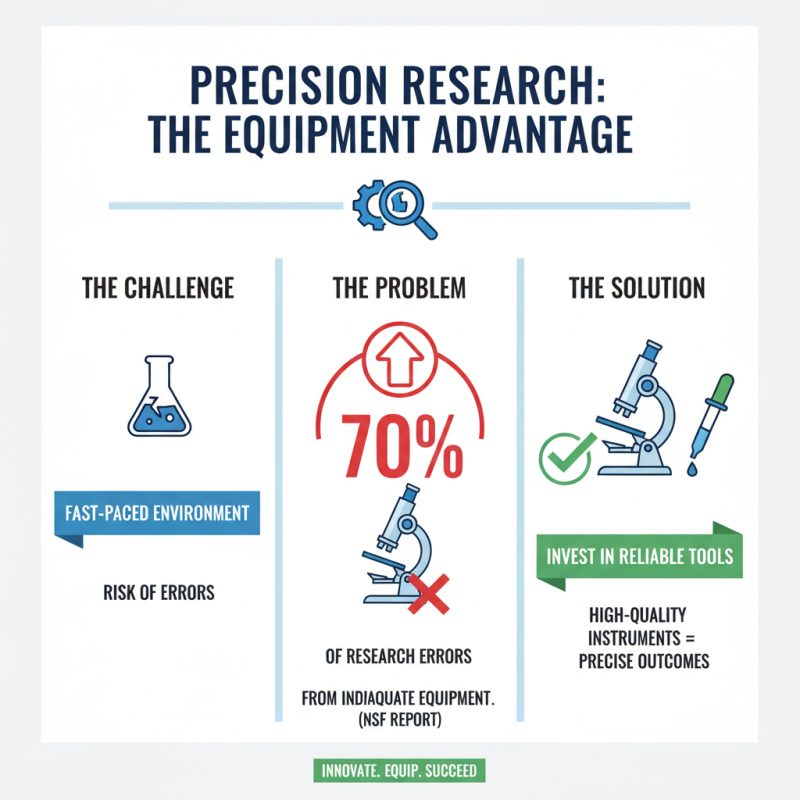
In today's fast-paced research environment, having the right tools and equipment is crucial. Innovative laboratories prioritize high-quality instruments to ensure precise outcomes. According to a report from the National Science Foundation, up to 70% of research errors stem from inadequate equipment. This highlights the need for investment in reliable tools.
High-quality microscopes, for example, empower researchers to see details that lower-quality ones miss. This improved visibility can lead to groundbreaking discoveries. Studies show that precise measurements can enhance reliability by 35%. Investing in advanced imaging technology offers a direct return on research quality.
However, not all research facilities can afford top-tier tools, leading to disparities in outcomes. For smaller labs, balancing budget constraints with essential equipment can be challenging. Simple updates, like better pipettes and centrifuges, occasionally yield significant improvements. It’s about making thoughtful choices based on specific research needs and the ultimate goals of the lab.
In the world of research, effective data management is key. A recent study revealed that mismanaged data can lead to a 30% increase in project costs and delays. Documentation plays a critical role in ensuring experiments are reproducible and findings are valid. One key practice is maintaining a centralized database for all experimental data. This helps prevent loss and redundancy.
Tip: Always label your files clearly. Use consistent naming conventions. This simple practice can save hours when searching for data. Ensure that every piece of data collected is logged meticulously. It may seem tedious, but accuracy in documentation can reduce errors.
Moreover, consider backing up your data regularly. According to research, 25% of researchers reported losing critical data due to poor backup strategies. Create a routine for data backups—weekly or even daily depending on your project scale. This minimizes risks and fosters reliability in your findings.
Tip: Use cloud storage for easy access and sharing among team members. Collaboration is often essential in research, and having accessible data can enhance teamwork. Remember, a small inconsistency today might lead to major errors later in your research journey.
| Tip | Description | Benefits |
|---|---|---|
| Use Laboratory Management Software | Implement software tools for tracking samples and data. | Improves data accuracy and accessibility. |
| Standardize Protocols | Establish standardized procedures for experiments. | Enhances reproducibility and reduces errors. |
| Regularly Update Documentation | Ensure all experimental notes are current and comprehensive. | Facilitates collaboration and knowledge sharing. |
| Implement Version Control | Use version control systems for protocols and data. | Tracks changes and ensures data integrity. |
| Conduct Regular Maintenance | Schedule equipment calibrations and repairs. | Prevents unexpected breakdowns and downtime. |
| Utilize Cloud Storage | Store data securely in cloud-based systems. | Ensures data is backed up and accessible anywhere. |
| Organize Research Data Logbooks | Maintain clear and detailed lab notebooks. | Provides a reliable reference for experiments. |
| Share Findings Promptly | Discuss results with peers in a timely manner. | Encourages feedback and collaboration opportunities. |
| Engage in Collaborative Research | Partner with other researchers and institutions. | Increases resource availability and idea exchange. |
| Implement Data Backup Procedures | Ensure data is backed up regularly to prevent loss. | Protects against data corruption or accidental deletion. |

Effective collaboration in research is essential for success. Establishing clear communication channels is the foundation. Regular meetings foster accountability and keep everyone updated. Virtual collaboration tools help researchers share findings in real-time. These tools can also reduce misunderstandings that often arise in emails or messages. While technology is helpful, it can sometimes create barriers. Not everyone is tech-savvy, and this might slow down discussions.
Building a positive team culture is equally important. Encourage a space where all members feel comfortable sharing ideas, no matter how small. This includes embracing imperfections in the research process. Mistakes should be seen as learning opportunities. Sometimes, experiments don’t yield expected results. These moments should spark discussion rather than frustration. Analyzing failures together can enhance team bonding.
Additionally, diversifying research teams can bring fresh perspectives. Different backgrounds lead to innovative approaches. However, managing diverse viewpoints can be challenging. It requires patience and open-mindedness. Conflict may arise, but it can also lead to breakthroughs. Researchers should reflect on their communication styles and adapt when necessary. This adaptability will enhance collaboration and ultimately maximize research potential.
In today's research landscape, leveraging technology has become essential. Advanced tools can streamline both processes and analysis. For instance, digital data collection methods can reduce human error. This not only saves time but also enhances accuracy. Automating repetitive tasks allows researchers to focus on creative problem-solving. However, not all technology is user-friendly. Researchers may face challenges in software integration, causing delays.
Cloud-based platforms offer another layer of efficiency. They enable collaborative work from different locations, breaking down geographical barriers. This approach encourages diverse perspectives, which can enrich research outcomes. Yet, reliance on cloud services raises important questions about data security. Are researchers fully aware of potential risks? Addressing these concerns is crucial for success.
Embracing technological innovations can revolutionize research practices. However, each tool comes with its own learning curve. Researchers must invest time in understanding these technologies. This is often a frustrating process, filled with trial and error. Nonetheless, pushing through these challenges leads to growth. It ultimately contributes to more impactful research findings.